Purpose of this Blog...

You may have noticed that not all books are equal in capturing children's imaginations and in cultivating those innocent, tender souls. My goal is to help you find the ones that do!
(Painting by Mary Cassatt: "Mrs Cassatt Reading to her Grandchildren" -1888)


Monday, August 8, 2016

Beyond Pippi: The Legacy of Astrid Lindgren

AFP/Getty Images 1966

Astrid Lindgren's daughter Karin was sick in bed and asked her mother to tell her a story.

“Tell me about Pippi Longstocking”, she pleaded (making up a random name), and in that moment she had invented what was to become one of the world’s most popular children’s book characters.

“Since the name was remarkable, it had to be a remarkable girl”, said Astrid Lindgren. For years she was making up new stories for Karin and her friends.

Then one spring day, in March 1944, Astrid fell and sprained her ankle. To pass the time, while she was resting it, she put the Pippi stories down on paper. It was going to be a present for Karin’s 10th birthday in May.

That was the start of a great career.

Statue of Astrid Lindgren outside of Junibacken Museum in Stockholm

Astrid Lindgren [1907-2002] has been showered with countless honors and awards.  She is fondly remembered in Sweden, including Stockholm, where she lived as an adult and wrote her books. 

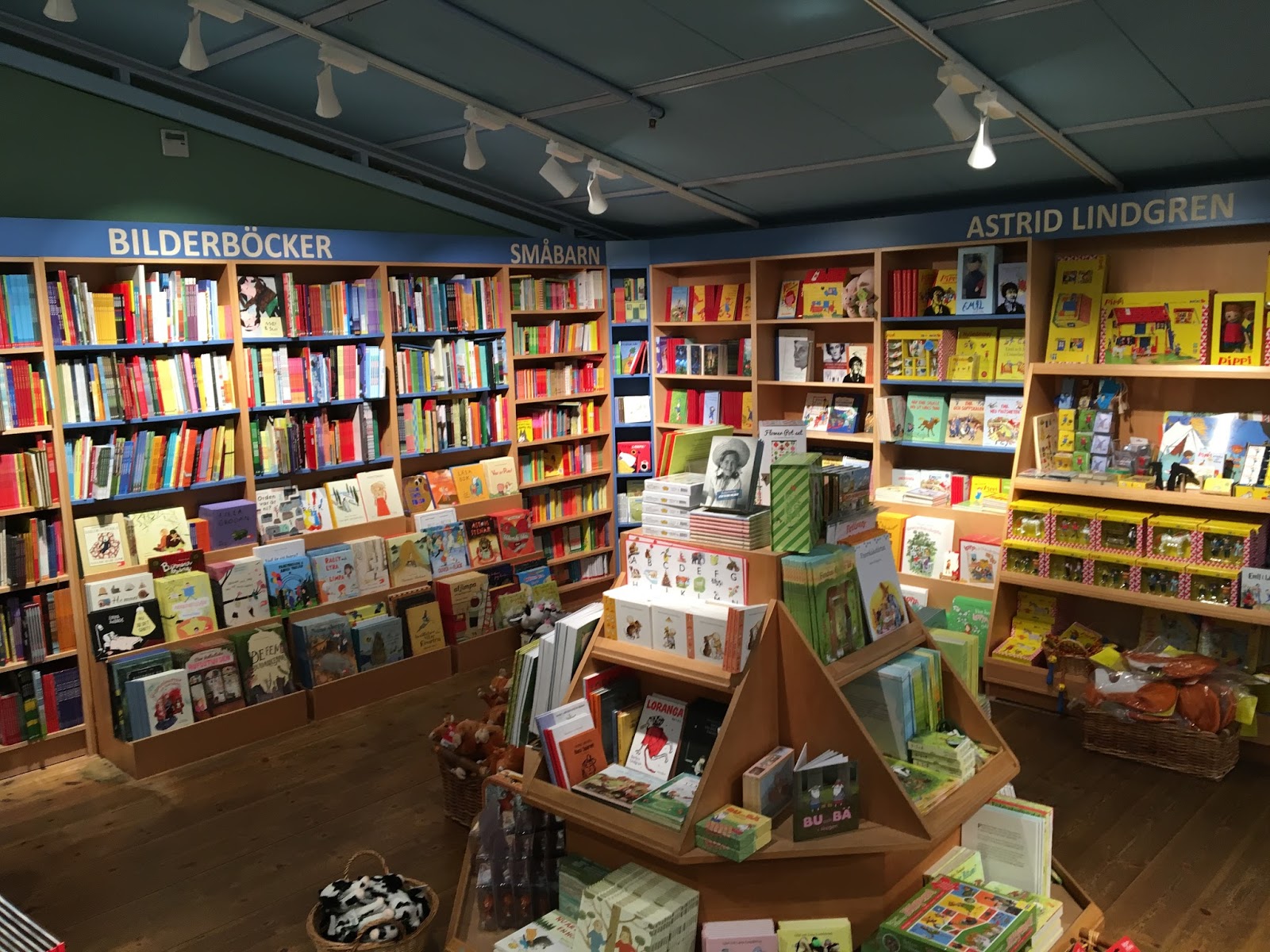
My tour guide's wife was happy to share some of her favorite titles with me when we were in Stockholm checking out Sweden's largest children's bookstore in the Junibacken Museum.

According to the museum website, the Junibacken story started with Astrid Lindren, and there is even a "Story Train" ride for kids through settings of her children's books.  She wrote the text, and her voice is heard narrating in Swedish.

When my children were young, we enjoyed Lindgren's picture books Christmas in the Stable and The Tomten, and we laughed at The Children in Noisy Village and my childhood favorite, Pippi Longstocking (find my post here). 

At the museum bookstore, my tour guide's wife recommended several books I was not familiar with by Astrid Lindgren -  The Brothers Lionheart, and the Emil in Lonneberga books.  They are on my shelf here at home now, waiting to be read and reviewed!


Astrid on reading:
“And we were sitting there on the floor, my brother and I, listening to her reading this wondrous story about ‘the giant Bam-Bam and Viribunda the fairy’. Well! That I didn’t die on the spot! In that instant a hunger to read was born in me, and with the impatience of a four year-old, I stared at those strange black squiggles which Edit could interpret, but I couldn’t. As if by some curious magic, the whole kitchen could suddenly be filled with fairies, giants and goblins.”


While touring Sweden, we drove through the area where Astrid Lindgren was born and grew up, and though I didn't get to visit her childhood home (the inspiration for many of her stories), we saw many quaint houses and barns painted "Swedish red" like hers!


Seriously, don't you just expect to see those children of Noisy Village running about!?


By the way, Pippi Longstocking is alive and well in Sweden - we saw lots of Pippi merchandise...


I think Astrid would be happy about that!

Please visit this informative website to see pictures of Astrid Lindgren's childhood home, and for an in-depth look at her life, books, and beloved characters: www.astridlindgren.se


Thursday, August 4, 2016

A New Book (For Me), in Which I am Introduced to a Moomintroll

What do you get from an author who 1) was born into the Swedish speaking minority of Finland; 2) spent her summers in a family cottage on an island; 3) had a father who was a sculptor, and a mother who was a graphic designer; and 4) as a young woman became so sad during WWII that she wanted to write something innocent and hopeful?  Tove Jansson's  Moomins!


If you've been following my blog the past few weeks, you are aware that I recently returned from a tour of Scandinavia. Our tour guide's sweet wife (herself a lover of children's literature and especially Astrid Lindren - more about that later), made sure I got to make a quick stop at the largest children's bookstore in Sweden. 

The bookstore was in a museum called Junibacken, which is devoted to children's literature.


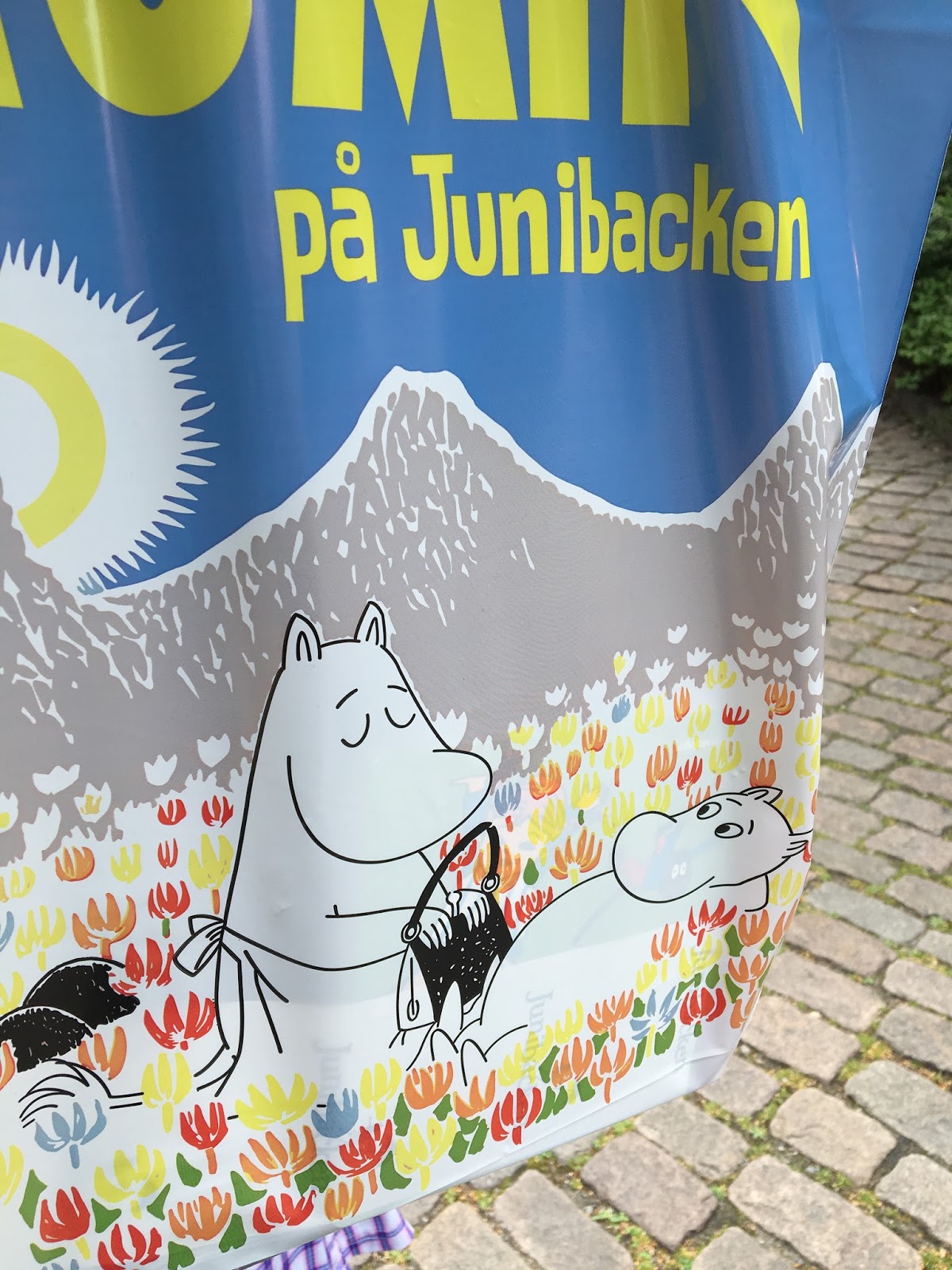
Junibacken Museum happened to have a Mumin (Swedish for "Moomin") Exhibit while we were there!  The exhibit consisted of a little themed playland with lots of fun settings from Tove Jansson's books...


Moominmamma's Kitchen


Well, truth be told, I had never read the Moomin books, but I had seen them listed on several "Best Children's Books" lists.  So I excitedly purchased my first one!


Moomintrolls.
Are they trolls, or what?
I'm not really sure...
As you can see, they are way cuter than the ugly Troll I came across at the Voss train station in Norway!


But Moomintrolls certainly seem to have stepped out of the world of Scandinavian folk-lore!

Finn Family Moomintroll is the third in the series, and the first one  ever translated into English.  I figured the English speaking world's introduction to the Moomin family was a good place for me to start!

Tove Jonsson's adorable illustrations really add to the stories.  They bring the reader along, and help us see the land and characters she has created.


(By the way, I adore the vintage book covers like the one above - see more here.  In my opinion, the new Puffin editions like mine, pictured at the top of this post, completely leave out the whimsical fairytale nature of the books.)

In Finn Family Moomintroll, the first bit of real magic happens after the Moomins have woken up from their long winter sleep and are enjoying a spring day mountain-top experience.  That's when they find a black top hat.


A Hobgoblin's Hat!  (Which they bring home.)

In the corner between the table and the kitchen door stood the Hobgoblin's Hat with the eggshell in the bottom.  And then something really strange happened.  The eggshell began to change its shape.
(This is what happens, you see.  If something lies long enough in the Hobgoblin's Hat it begins to change into something quite different - what that will be you never know beforehand.  It was lucky that the hat hadn't fitted Moomominpappa because the-Protector-of-all-Small-Beasts knows what would have become of him if he had worn it a bit longer.  As it was he only got a slight headache - and that was over after dinner.)
Meanwhile the eggshell had become soft and woolly, although it still stayed white, and after a time it filled the hat completely.  Then five small clouds broke away...

Moomintroll (Moomminpappa and Moominmamma's child) and the Snork Maiden (his friend) figure out how to fly the little clouds.  So they hop on, and away they go!  

They come across Hemulen (another Moomin), who collects stamps.


When they greet him, Hemulen says:
"That's extraordinary.  But I'm so used to your doing extraordinary things that nothing surprises me.  Besides I'm feeling melancholy just now...my stamp collection is complete"....

"I think I'm beginning to understand," said Moomintroll slowly.  "You aren't a collector anymore, you're only and owner, and that isn't nearly so much fun."

There are all sorts of whimsical (and some slightly scary) characters in Moominvalley, and they go through all sorts of non-sensical adventures.  


Think Edith Nesbit's "Psammead", from The Five Children and It, mixed with L. Frank Baum's The Marvelous Land of Oz, a little bit of of A.A. Milne's Winnie the Pooh and the Hundred Acre Wood thrown in, and you've got an idea of how fun these books are.

Have you read about the Moomins?  If you haven't, I think you and your child will really like these silly little creatures!

And please come back for more posts - I still have a Scandinavian Book Giveaway coming up! 

Monday, August 1, 2016

D is for Dalahäst!


In olden days a wooden Dala horse - "Dalahäst" - was a toy for children; in modern times it has become a symbol of Sweden itself.

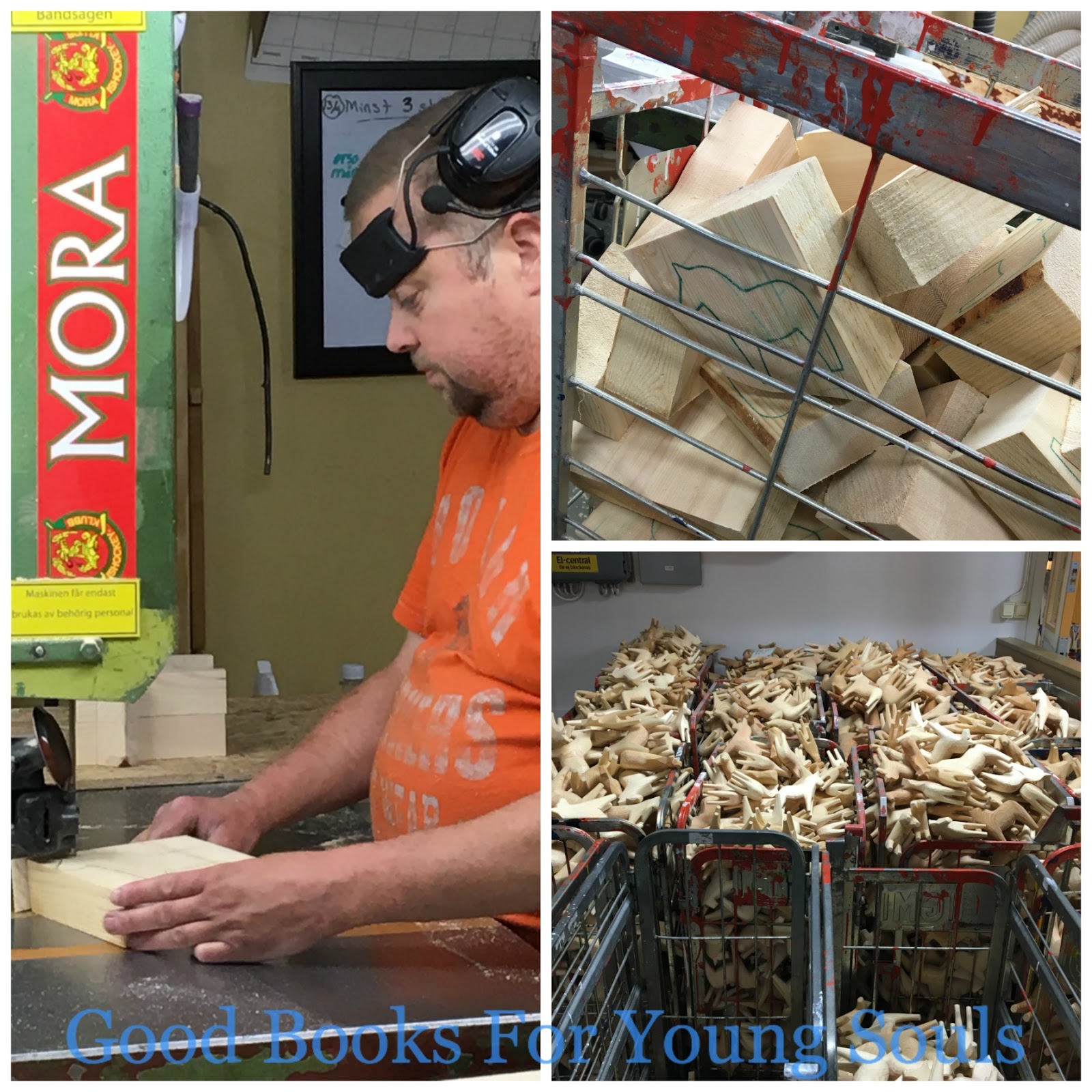
Since these red hand painted horses have been part of Swedish folkart for over 300 years, a trip to Scandinavia would be incomplete without a visit to a workshop where the popular wooden horses are still made today.  Here's what I saw...


Before the 1920's and the invention of the bandsaw, Dala horses were completely made by hand. Today they are still hand carved and hand painted, after the horse pattern is stamped onto wooden blocks and cut out with the saw.


My grandson loves the little Dala horses I brought home to add to my small collection.  He set up a whole parade going across our kitchen table, and he was fascinated by the pictures I took at the workshop.


I decided to google "Swedish Dala horse" and found a video so my grandson could watch the whole process of how they are made.  

Go here to watch this excellent video all about the Dalahäst workshop I visited.

Which brings me to today's awesome Nordic alphabet picture book, D is for Dala Horsewritten by Kathy-jo Wargin and illustrated beautifully by Renee Graef (she also illustrated the first American Girl Collection Kirsten books from Pleasant Company.)


Psst...I'll be giving away this Nordic alphabet book (and more)  soon, so stay tuned to my upcoming Scandinavian Literary Travel posts!

As my grandson and I read D is for Dala Horse together, we had fun going back and forth from the cute book illustrations and descriptions for each letter to my (very!) similar photos.  The author included many of the interesting things I saw, such as...

B is for...Bunad (a Norwegian way to dress)...

C is for...Copenhagen

D is for...Dala horse

F is for...Fjords

H is for...Hans Christian Anderson

O is for...Oslo

R is for...Runestones

T is for...Troll... 

V is for...Viking ship

I've got lots more to tell you about Scandinavia in my upcoming posts. You can find D is for Dala Horse here (or wait for my Scandinavian Giveaway!)  Remember, you're always welcome here on my Good Books For Young Souls Blog...come in and stay awhile!


Wednesday, July 27, 2016

I Made It to Kristin's Medieval Norway!


I brought my copy of Kristin Lavransdatter, The Bridal Wreath home to Oslo, Norway.  This was near the end of my Scandinavian tour with my mother and sisters, so I guess I'm starting at the end of my trip.  But I'll work my way backwards with these posts, until I get to the beginning of our journey.

To understand the scope and influence of Sigrid Undset's Kristin Lavransdatter trilogy to the Norwegian culture (and the literary world), it helps to know a little about Nobel Prize winning author Sigrid herself and the city she grew up in.  (Go here for an excellent review of the trilogy.  The author shares my exact sentiments on why sticking with Charles Archer's older English translation of Kristin Lavransdatter will transport you to a better and more medieval world than the more recent English translation).

Source

Author Sigrid Undset was born on May 20, 1882, at Kalundborg, Denmark, but she moved to Norway at the age of two because of her father's illness. Ingvald Undset was an internationally respected archaeologist, whose speciality was the Iron Age in Europe, with Norse and European pre-history as supplementary fields. His illness forced him to give up his extensive travel and archaeological research all over Europe.

So Sigrid grew up in the city of Kristiania - Norway's capital (the name was changed back to Oslo in 1925).  The first 11 years of her life were not only strongly influenced by her father's serious illness (he died when she was 11), but also by his extensive knowledge of history.

At an early age, Sigrid had learned many of the secrets of archaeology as well as the mysteries of the Norse sagas and Scandinavian folk songs.

With that background her storytelling began, and later in her life she wrote the medieval Kristin Lavransdatter trilogy (I would recommend this historical novel, for ages no younger than 16 and up).

To me, parts of it feel like an ode to medieval Oslo!  Kristin met Erlend while staying at Nonneseter Abbey in Oslo, so I was happy to get a view of the city and its islands from our perch at a restaurant on a hilltop full of Viking history.


Unfortunately, all of the monasteries, convents and churches Kristin visited in the book are now just ruins that I viewed from the hilltop and later from the window of our tour bus.  Our very kind female guide was thrilled and proud to know that I had read the novels, so she had the driver slow down as we passed some of the sites.

Happily, the Akerhus Fortress built by King Haakon V (1299-1319) is still standing.


Oslo goes back to even before the middle ages.  It is one of the cities claimed to hail from the Viking Age, and excavations have revealed a city structure there that dates back to 1000 AD.


We visited Oslo's Viking Ship Museum...where I saw a Kristin-look-a-like visitor who was dressed up medieval style - she even had a baby bound to her chest!


Our next and last city was Bergen, where we visited a reconstructed Stave Church. The old stave church, originally built in 1150, burned down in 1992.
 

Fantoft Stave Church has been rebuilt exactly as it was before the fire. I'm sure it looks much like the Stave church in Bridal Wreath.  Remember the heart-wrenching chapter when Erlend, Kristin, and her family try to save their wooden Stave church, "Olav's Church", after it becomes engulfed in a raging fire?


I really wish we could have seen one with medieval DNA, but I had to settle for the smell of fresh lumber and just pretend it was an ancient building...


I can just picture Kristin worshipping with her family here, can't you?


My mom is of Norwegian descent, so we all loved touring the beautiful sights and being introduced to the history of medieval Norway.

Mom with one of her favorite purchases!

But the rain, waterfalls, and stately pine trees will have to give way to sunny skies, red houses, and slender birches as I take you to Sweden, leaving the majestic fjords of Norway behind. (Stay tuned for Swedish horses and Astrid Lindgren!)


Saturday, July 2, 2016

Scandi Bound

Very soon I'll be making a trip of a lifetime to Scandinavia with my mom and three sisters, so I'll be away from my blog for awhile.  I'm taking my worn copies of Sigrid Undset's Kristin Lavransdatter Trilogy to read on the plane.


I can't wait to see the fjords and stave churches of Norway, see the traditional Scandinavian folk costumes, and taste the yummy smorgasbord foods and pastries in Sweden and Denmark (I've had a Danish preview in Solvang, CA)!

If I had a granddaughter, I'd be tempted to bring back a traditional Norwegian bridal crown like this one! (photo cred: Milk Magazine Dec 2010)  The little girl modeling it reminds me of Anja from The Christmas Wish!


My three and a half year old grandson Peter loves this book by Swedish author Elsa Beskow!  She is often called the "Beatrix Potter" of Scandinavia.  (Go here to read my past post about her books.)


I'll be back soon!  In the meantime, click here for my past posts about other favorite Scandinavian stories, including some by Astrid Lindgren and Ingri and Edgar Parin d'Aulaire.