Purpose of this Blog...

You may have noticed that not all books are equal in capturing children's imaginations and in cultivating those innocent, tender souls. My goal is to help you find the ones that do!
(Painting by Mary Cassatt: "Mrs Cassatt Reading to her Grandchildren" -1888)


Wednesday, August 17, 2011

NO SEWING REQUIRED: FUN & EASY BOOK BAG PROJECT YOU CAN MAKE AT HOME

In the old days, you carried your books like this!
(Click here to see more from this vintage photo shoot by
 Becca Bond Photography)
Kids love having their own book bags to tote their library books around in, so when I was invited to have a "Good Books" table at the Placentia Library's Summer Reading Celebration last weekend, I decided to make a couple of book bags to give away to my young visitors. I held an opportunity drawing for all the families who came by my table and signed up for a chance to win.

I don't sew, so I went to a local fabric store and found cute, inexpensive canvas bags, and iron-on alphabet letters and patches.


Since I couldn't personalize the bags, I decided to put "B-O-O-K-S" in iron-on letters onto each tote.  I chose a denim-blue satchel and robot patch for the boy winner, and a white-and-pink satchel and mermaid patch for the girl winner.
  

It only took me about an hour to cut out the letters and iron them, along with the fun patches, onto both bags...I think they turned out pretty cute!!


Here they are, all ready to mail to my two winners so they can take them along on their next visit to their local library.


Saturday, August 13, 2011

SUMMER READING CELEBRATION AT THE PLACENTIA LIBRARY

My table was full of information about good read aloud books.
I met and talked to at least 200 kids and their parents today that stopped by my table on their way to free pony and train rides, puppet shows, crafts, and free food (snowcones, hotdogs, pizza, and more!)


Marisa Timothy, Administrative Assistant
It's absolutely amazing to me what a good "Friends of the Library Foundation" can accomplish.  In Placentia, California, they were able to donate money to their library -- not only for an awesome computer center, but also to sponsor the library's 3rd Annual Summer Reading Celebration for the community, marking the end of their summer reading program.

The visionary library director, Jeanette Contreras, has a wonderful staff and team of volunteers to thank for all their help in putting together a wonderfully organized day.

Click HERE to read my past post about the Placentia Library and their great storytime for children.


DON'T UNDERESTIMATE THE IMPORTANCE OF READING ALOUD TO CHILDREN

"Richer than I you can never be --
I had a Mother who read to me."
-Strickland Gillian

Whether you're a mother, father, aunt, uncle, grandmother, grandfather, teacher, or babysitter...please make reading aloud a priority for the children in your lives!  


15 Read Aloud "DON'Ts" to remember from Jim Trelease:

  • Don’t read stories that you don’t enjoy yourself. Your dislike will show in the reading, and that defeats your purpose.
  • Don’t continue reading a book once it is obvious that it was a poor choice. Admit the mistake and choose another. Make sure, however, that you’ve given the book a fair chance to get rolling; some, like Tuck Everlasting, start slower than others. (You can avoid the problem by prereading at least part of the book yourself.)
  • If you are a teacher, don’t feel you have to tie every book to class work. (Don’t confine the broad spectrum of literature to the narrow limits of the curriculum.)
  • Don’t overwhelm your listener. Consider the intellectual, social, and emotional level of your audience in making a read-aloud selection. Never read above a child’s emotional level.
  • Don’t select a book that many of the children already have heard or seen on television. Once a novel’s plot is known, much of their interest is lost. You can, however, read a book and view the video afterward. That’s a good way for children to see how much more can be portrayed in print than on film.
  • In choosing novels for reading aloud, avoid books that are heavy with dialogue; they are difficult reading aloud and listening. All those indented paragraphs and quotations make for easy silent reading. The reader sees the quotations marks and knows it is a new voice, a different person speaking—but the listener doesn’t. And if the writer fails to include a notation at the end of the dialogue, like “said Mrs. Murphy,” the audience has no idea who said what.
  • Don’t be fooled by awards. Just because a book won an award doesn’t guarantee that it will make a good read-aloud. In most cases, a book award is given for the quality of the writing, not for its read-aloud qualities.
  • Don’t start reading if you are not going to have enough time to do it justice. Having to stop after one or two pages only serves to frustrate, rather than stimulate, the child’s interest in reading.
  • Don't be overimpressed by book awards. Most of the great read-alouds never won a Newbery or Caldecott medal.
  • Don’t get too comfortable while reading. A reclining or slouching position is most apt to bring on drowsiness. A reclining position sends an immediate message to the heart: slow down. With less blood being pumped, less oxygen reaches the brain—thus drowsiness.
  • Don’t be unnerved by questions during the reading, particularly from very young children in your own family. If the question is obviously not for the purpose of distracting or postponing bedtime, answer the question patiently. There is no time limit for reading a book, but there is a time limit on a child’s inquisitiveness. Foster that curiosity with patient answers—then resume your reading. Classroom questions, however, need to be held until the end. With twenty children all deciding to ask questions to impress the teacher, you might never reach the end of the book.
  • Don’t impose interpretations of a story upon your audience. A story can be just plain enjoyable, no reason necessary, and still give you plenty to talk about. The highest literacy gains occur with children who have access to discussions following a story.
  • Don’t confuse quantity with quality. Reading to your child for ten minutes, with your full attention and enthusiasm, may very well last longer in the child’s mind than two hours of solitary television viewing.
  • Don’t use the book as a threat—“If you don’t pick up your room, no story tonight!” As soon as your child or class sees that you’ve turned the book into a weapon, they’ll change their attitude about books from positive to negative.
  • Don’t try to compete with television. If you say, “Which do you want, a story or TV?” they will usually choose the latter. That is like saying to a nine-year-old, “Which do you want, vegetables or a donut?” Since you are the adult, you choose. “The television goes off at eight-thirty in this house. If you want a story before bed, that’s fine. If not, that’s fine, too. But no television after eight-thirty.” But don’t let books appear to be responsible for depriving the children of viewing time.


The information here is from a free brochure, available for downloading at:
www.trelease-on-reading.com/parent-reading-brochure.html


Thursday, August 11, 2011

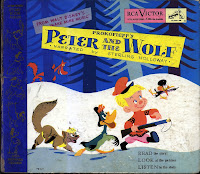
REMEMBERING STORY RECORDINGS: "You Can Read Along With Me in Your Book..."

Childhood nostalgia takes over when I recall the many hours I spent listening to story recordings; so I about flipped out when I discovered (thanks to a tip from The Book Chook) this FREE website where you can listen to - and look at - these oldies but goodies!  I remember the prompt for pre-readers: "You will know it is time to turn the page when you hear..." and then there would be a cue, such as chimes ringing, Tinkerbell tinkling her bell, the Saggy Baggy Elephant trumpeting, etc. .  

Some of my favorites were Golden Books like THE SAGGY BAGGY ELEPHANT, THE TAWNY SCRAWNY LION, THE POKY LITTLE PUPPY, THUMBELINA, SCUFFY THE TUGBOAT, and of course the ever-popular DISNEY stories...
 
 http://www.thestrong.org/online-collections/images/Z001/Z00106/Z0010613.jpg
 https://blogger.googleusercontent.com/img/b/R29vZ2xl/AVvXsEi4fwaDqq3fP4VDbFrbYF0capuD4KJmDrcmONfxbXIeCbzAnAbhKHIm6l9nVRF2SGyoFYkT1PIeexLuMIZ4P6b8F9KHSRTaCVzBur-whgto72qzfyBmMV94gXq6NpCp0bDZsPxUjrvjfGZ2/s400/PeterAndTheWolf.jpg
Check out this STAR WARS ABC , that my kids would have loved! ("You will know it is time to turn the page when you hear R2D2 beep like this...")
 
Have fun re-discovering your favorites!

Tuesday, August 9, 2011

WHAT'S SO GREAT ABOUT DENISE FLEMING'S BOOKS? EVERYTHING!

Your toddler will love the bright artwork of Denise Fleming, and you will too! Her THE EVERYTHING BOOK (ages 1-3) covers just what is says...
The Everything Book

The book starts with a rooster crowing, 
"Cock-a-doodle-do!  Hello!  Good day! Good morning to you!" 
and ends with a mother hen and her chicks, 
"Five little chicks without a peep close their eyes and go to sleep.  Good night".  


What's in between?  Mealtime, colors, shapes, ABC's, 123's, traffic lights, seasons, pets, faces, nursery rhymes, fingerplays, and more! (even ladybugs to count on each page)


ABOUT DENISE'S AMAZING AND UNIQUE ARTWORK (in her own words):
Over the years, my work changed, then changed again. I now work primarily in paper—creating images by pouring colored paper pulp through hand-cut stencils. I feel that my art has come full circle from the bold, colorful paintings of childhood, through a period of tight, detailed images, and back again to bold, colorful, more childlike images.
Papermaking for me is cathartic. Part of its appeal is that it’s very physical—toting buckets of water, beating large quantities of pulp, hand-mixing huge vats of color. It’s different from the Bob Cratchit-like existence that my former finely detailed style required—hunched over my drawing board with electric pencil sharpener close at hand. What other medium requires that you be up to your elbows in brilliant color? It’s wet, messy, and wonderful – I haven’t picked up a brush or a colored pencil since I discovered papermaking.

Want to see more books by this prolific author/illustrator?  CLICK HERE to view her webpage booklist.

Monday, August 8, 2011

A.A. MILNE POEMS, MUPPET STYLE!

HALFWAY DOWN THE STAIRS
by A.A. MILNE (from WHEN WE WERE VERY YOUNG, published 1924)


Halfway down the stairs
Is a stair
Illustration: E.H. Shepard
Where I sit.
There isn't any
Other stair
Quite like
It.
I'm not at the bottom,
I'm not at the top;
So this is the stair
Where
I always
Stop.


Halfway up the stairs
Isn't up
And it isn't down.
It isn't in the nursery,
It isn't in town.
And all sorts of funny thoughts
Run round my head.
"It isn't really
Anywhere!
It's somewhere else
Instead!"

Harold Fraser-Simson, who put many of Milne's poems to music, adapted the verse. The resulting song, Halfway Down the Stairs, was used in the first season of THE MUPPET SHOW.


Another Muppet interpretation of an A.A. Milne poem that my kids loved: Cottleston Pie, by Rowlf.  Pooh sings “Cottleston Pie” in Chapter 6 ("In Which Eeyore Has a Birthday and Gets Two Presents") of WINNIE-THE-POOH (published 1926). Pooh has just met up with Eeyore who greets him with a confounding conversation, so Pooh decides to sing...


"Cottleston Cottleston Cottleston Pie,
A fly can't bird, but a bird can fly.
Ask me a riddle and I reply
Cottleston Cottleston Cottleston Pie.
(That was the first verse. When he had finished it, Eeyore didn't actually say that he didn't like it, so Pooh very kindly sang the second verse to him:)
Cottleston Cottleston Cottleston Pie,
A fish can't whistle and neither can I.
Ask me a riddle and I reply
Cottleston Cottleston Cottleston Pie.

(Eeyore still said nothing at all, so Pooh hummed the third verse to himself:)
Cottleston Cottleston Cottleston Pie,
Why does a chicken? I don't know why.
Ask me a riddle and I reply
Cottleston Cottleston Cottleston Pie."

Thursday, August 4, 2011

FOR ALL YOU LAURA INGALLS WILDER FANS OUT THERE...

You can find out everything you'd ever want to know about this adored author from the website Laura Ingalls Wilder, Frontier Girl.  All your questions will be answered about her family, her friends, her homes, the illustrators of her books, and even Pa's fiddle.

There are also lots of great links.  (Did you know that the book 1,000 Places to See in the U.S.A. & Canada Before You Die features the "Laura Ingalls Wilder Country" of De Smet, South Dakota?)

At the age of sixty-five, Wilder published the first of her eight "Little House" books, which she had been encouraged to write by her daughter, Rose. Who can say how many kids have been impacted by these stories about a girl raised on the American Prairie?

Here's the list, including their published date, title, and the years they cover (which was your favorite?):

1932 - Little House in the Big Woods 1871-1872 (Laura's age: 4-5)
Little House in the Big Woods Book and Charm (Charming Classics)
1933 - Farmer Boy (about her future husband Almanzo's childhood)
Farmer Boy (Little House)
1935 - Little House on the Prairie 1873-1874 (Laura's age: 5-7)
Little House on the Prairie 75th Anniversary Edition
1937 - On the Banks of Plum Creek 1874-1876 (Laura's age: 7-9)
On the Banks of Plum Creek (Little House, Book 4)
1939 - By the Shores of Silver Lake 1879-1880 (Laura's age: 12-13)
By the Shores of Silver Lake (Little House)
1940 - The Long Winter 1880-1881 (Laura's age: 13-14)
The Long Winter (Little House)
1941 - Little Town on the Prairie 1881-1882 (Laura's age 14-15)
Little Town on the Prairie (Little House)
1943 - These Happy Golden Years 1883-1885 (Laura's age: 15-18)
These Happy Golden Years (Little House)